
Hurricane exposes gaps in crop distribution
Published:Saturday | January 31, 2026 | 12:06 AMOlivia Brown/Gleaner Writer


In the weeks following Hurricane Melissa’s passage across Jamaica late last year, a troubling contradiction became visible across the island. While shortages and soaring prices confronted consumers, large volumes of produce lay unsold and rotting in fertile farming districts.
According to agriculturist Andre Anderson, this was no accident of weather or timing, but the clearest expression yet of a long-standing failure in how food moves from field to market, one with serious implications for food security, economic resilience and long-term growth.
The disparity was especially evident in Clarendon, where crops spoiled even as identical produce commanded exorbitant prices elsewhere. Anderson argues that the post-hurricane imbalance exposed a deeply fractured distribution system, incapable of redirecting supply efficiently when normal demand was disrupted.
Anderson, managing director of A-Grade Pest and Landscaping Management Services and president of the Clarendon Association of Branch Societies of the Jamaica Agricultural Society (JAS), describes the breakdown as stark and indefensible.
“While pumpkins were at risk of rotting in fields in May Pen, the same commodity was selling for $300 to $350 per pound in St Ann’s Bay,” Anderson told The Gleaner. “Lettuce and pak choi spoiled in Bog Hole, yet they were scarce in Port Antonio.” In his view, the problem is not insufficient production, but failed coordination, weak planning and a market system that remains poorly connected.
Official data appear to support his assessment. Last week, Agriculture Minister Floyd Green announced that several short-term vegetable crops had returned to surplus levels less than three months after Hurricane Melissa passed. According to the minister, excess production was evident in yellow squash, cucumbers, cauliflower, lettuce, pak choi, zucchini, carrots and string beans. Notably, the surplus is being recorded in parishes among the most severely affected by the Category-5 hurricane, including St Elizabeth, St Ann, Westmoreland, Manchester, Clarendon and St Thomas.
PRICES STABILISE
Green cautioned, however, that in some instances the surplus reflected reduced demand rather than increased consumption.
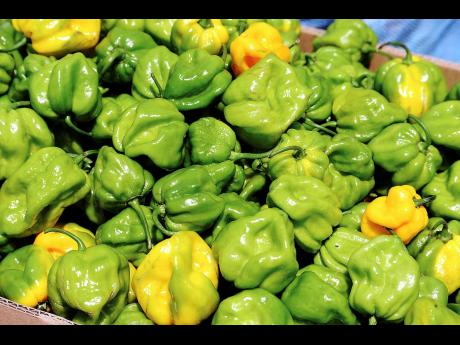
The minister also reported that market prices for several crops had begun to stabilise, with reductions ranging from 14 per cent to 77 per cent. Watermelon prices fell by 63 per cent; Scotch bonnet pepper by 20 per cent; pumpkin by 33 per cent; sweet pepper by 20 per cent; and carrot by 40 per cent.
For Anderson, the episode underscores deeper structural weaknesses in the economy. Agriculture, forestry and fishing accounted for just over nine per cent of Jamaica’s gross domestic product in 2023 – a modest, but still critical, contribution to national output despite mounting environmental pressures. Services, particularly tourism, remain dominant, contributing roughly 60 per cent of GDP, while industry accounted for about 18.7 per cent.
He contends that the country’s heavy reliance on tourism – an industry acutely vulnerable to hurricanes, pandemics and global economic shocks – has long obscured inefficiencies in the domestic food-distribution system. “Tourism is not an enemy of Jamaican agriculture. It is effectively a local export. When visitors come to our shores, they consume Jamaican goods and services. They are the world coming to us.” When the sector slows, as it did after Melissa, he adds, the fragility of food-distribution mechanisms becomes unmistakably clear.
The Economic and Social Survey Jamaica 2023 reinforces that vulnerability, reporting contractions in key crop groups for domestic food production, including vegetables, legumes and other staples, driven partly by extreme weather patterns and drought conditions that preceded the hurricane.
Infrastructure, however, is no longer the principal constraint, Anderson maintains. “No place in Jamaica is truly far away anymore. With improved highways and major roads, it is possible to encircle the island in a single day. Crates for proper packaging and transportation are available locally. What is missing is coordination and a market-driven mindset,” he told The Gleaner.
His argument extends beyond stabilising domestic supply. With more than three million visitors arriving annually in a good year, Jamaica already enjoys access to an international market without exporters leaving the island. Anderson believes this should incentivise improved consistency, higher production standards and better planning, allowing farmers to meet domestic demand, serve the tourism sector and pursue export opportunities simultaneously.
“The time has come for diversification ... not just in what we grow, but in how and for whom we produce. We must move away from a survival mindset and toward one rooted in growth, resilience, and intelligent responses to shocks.”
Jamaican farmers, Anderson maintains, are fully capable of thriving – but only if deliberate systems are built to connect production to markets, reduce waste and adapt to an increasingly volatile climate and global economy.
As he puts it, “Hurricane Melissa held up a mirror. What we saw should not be ignored. The real question now is whether we will act on what has been revealed.”